
Being an Urban Alaskan #1 – Why the hell do you live in Alaska?

[Updated 07/29/2021 – I was in the shower this morning thinking about work and life and school and all that and I remembered this series, and how it just sort of died. I thought I’d revist it and break from the grad-school posts, at least for a minute.]

Some time ago, as I crawled out of bed and rummaged through my social media notifications from friends in more civilized timezones, I tossed out the idea of a blog about the urban Alaskan experience. This was followed immediately by positive reception and encouragement to consider a series of posts. So, here I am. These blog essays are going to be relatively short and focused on one general topic. As I proceed through my stories of the Urban AK experience, if anyone has a story to share, I’ll post it in the series.

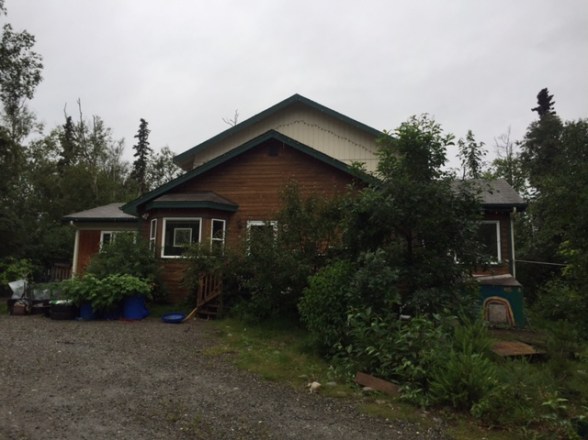
To answer the question in the title of this post: I live in Alaska because this is where I grew up. While I wasn’t born here, this is home. From my earliest memories until I was about ten, I lived in Anchorage then we moved to Wasilla. My college years were spent in Fairbanks with a couple summers in Seward. After college my wife and I moved to Maryland for a year then we were back to Seward, then Anchorage and finally Wasilla, in the home we’ve lived in since.

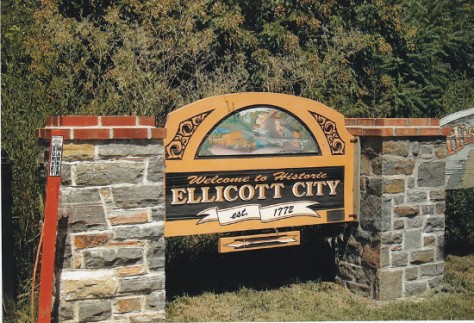
As with many white urban Alaskans around my age, I wasn’t born here. I was born in Georgia to parents from Ohio and Minnesota. We came up when I was around 1. As you could imagine, I don’t have any memory of that time. I consider my year long adventure in Maryland the only time I’ve lived out of state. While I’m about to go on in a whole pile of posts about how much urban Alaska is just like everywhere else, I’d be lying if I tried to tell you moving from Fairbanks, AK to Ellicott City, MD wasn’t a shock to the system. I can’t exactly put my finger on it, but there is a real, tangible difference between east and west coast culture.
IMG_20170802_0003

The truth of it is that I had a great job in Maryland. It was super interesting, paid well, and had excellent prospects for advancement. Really, it was exactly the kind of place you go off to have a career. After about 9 months or so, it became clear that the bustling ocean of humanity and unfamiliar pace of life weren’t a good fit for us. This wasn’t really an overnight realization, it settled on us slowly until it wasn’t deniable anymore. We started looking around us and peering uncomfortably into the future in that lazy manner twenty-somethings do. You know – the future is a place we’d have to go at some point, but not just yet, so let’s not think about it too hard. Those small forays into “what do you think the future holds” made us realized that life was going to be completely unlike either of our childhoods. We weren’t going to have a cute little house with a creek out back and maybe some chickens and things. Living in Maryland meant we’d be crammed into a row-house, neighbors stacked so tightly on either side that we might as well be dried, salted, and packed in oil.

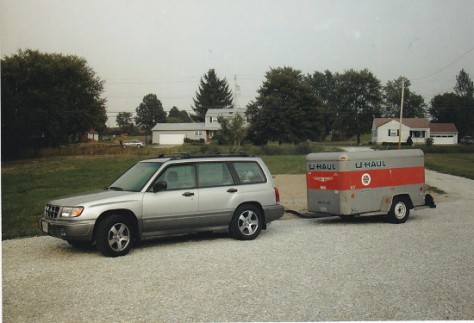
It wasn’t until we went back to Alaska for a couple of weeks that it became abundantly clear that that happiness wasn’t going to come from work alone (a life-lesson I’ve got to re-teach myself every few years). We were also going to have to be happy with where we were. So, we made a plan, packed all of our things into our Subaru and a little trailer and scuttled back up the highway. Neither of us had a job, our savings amounted to just enough to get us through a month, and yet off we went.
IMG_20170802_0002

After a challenging few months, we found good jobs, then a bit later a nice little house with the creek and eventually chickens. Really, we could have gone anywhere to find this. Even in Maryland, had we really really looked, made some concessions, and developed a plan, we’d have found something similar. Really, the pull to home was strong and so here we are, and hopefully, here we stay.

IMG_20170802_0001

Next up: What’s it like to live in Alaska?

It’s hot out there

forest-fire-432870_1280

There it is again. You could make an argument that it sounds about like any other prop-driven aircraft, excepting the DC-6 has a low throbbing growl, perhaps owing to the weight 3,000 gallons of fire retardant it’s hauling. In some respects that sound should be reassuring. It means that someone is looking out for us, yet it’s thoroughly disturbing, because you only hear them when there’s a fire nearby.

Fire season comes every summer. Around here the worst of it usually seems to be in the springtime when folks are trying to clear away brush and the tinder-dry trees have yet to get a few good rain-showers. Further north, it tends to be worse later, in large part, because of increased lightening activity and much hotter, drier conditions.

As I listen to the fading hum of the aircraft engines, I start to wonder. Is this the year? I mean, it could be. Everything is green and we’re hardly in to May. In spite of repeteted threats, the daily appearance of ominous looking clouds have failed to do more than spit a few drops of rain for the last several months. Is this the year of the fire?

I’ve lived in Alaska for over 35 years, and I can’t recall ever having had spring this early. As a child I can remember hunting easter eggs in calf-deep snow. I may have been short and it was the granular dessicated snow of late winter that has a way of working it’s way into the top of your shoe and causing ankle freeze, but it was still snow. This year, my kids didn’t have an Easter egg hunt, but if they had, it would have been in above-freezing weather without snow under the swelling buds of the birches.

For years we’ve been hearing the phrase ‘early fire-season’. It’s been said routinely enough now I reckon it’s safe to just call it normal. Every one of those years I’ve heard it, I’ve wondered if wild fire will devastate the Anchorage hillside, reaching even into mid-town, displacing tens of thousands of residents. Perhaps, it will be Wasilla instead, burning through the sprawling suburban neighborhoods and even across Lake Lucille where flaming ash could alight on Sarah Palin’s house, causing even her to eat her words on climate change.

I don’t know, but what I do know is that every year, the feeling of danger is lurking just at the edge of my conscience. Sometimes it’s just general discomfort. This year, it’s a little worse. As I drove home listening to a report of the evacuation of Fort McMurray, Alberta, a northern city with a population of 80,000, I saw a jaw-clenching sight from the highway. A column of smoke, much too close to home, rising from the patch of land between the Knik arm and the Talkeetna mountians. It was not the smoke of a controlled burn. It was a wide band heralding the arrival of a potentially dangerous wild-fire.

As I thought of those people in Canada, with so little time to gather their most precious belongings and head for safe ground, I wonder, is this going to be my lot this year too? What will we do with the animals? If I have only 45 minutes to evacuate what to I take? Where will I go? How will many thousands of people evacuate on only three routes, two of which are only two-lane highways.

It also begs the question, how the hell did we get here? March used to be a bitterly cold bitch of a month. The past few years have been pretty damn mild, really. I understand that it’s an El Nino year, a year where warm ocean currents poke much further north than usual, but I’ve been through those before. They’ve been nothing like this. Is this what we can expect from climate change? Is this the shape of things to come? Will the fires continue to close in our our Alaskan urban centers until disaster? I expect the answer is yes. In spite of all caution and tireless heroics of our wildland fire crews, we could very well find ourselves watching as any one of the most populated areas of our state burns.

I know, perhaps this is all a doomsday scenario, after all the story is hardly a 3rd line note in the local news outlets, failing even to beat out an electronic-device sniffing dog, but as I sit and watch the thermometer outside my window with disbelief, listen to yet another DC-6 rumble overhead, and wait for the golden sky to turn hues of pink and orange, I wonder just how unrealistic it is. After-all, green trees before the end of April? Who ever heard of such a thing?